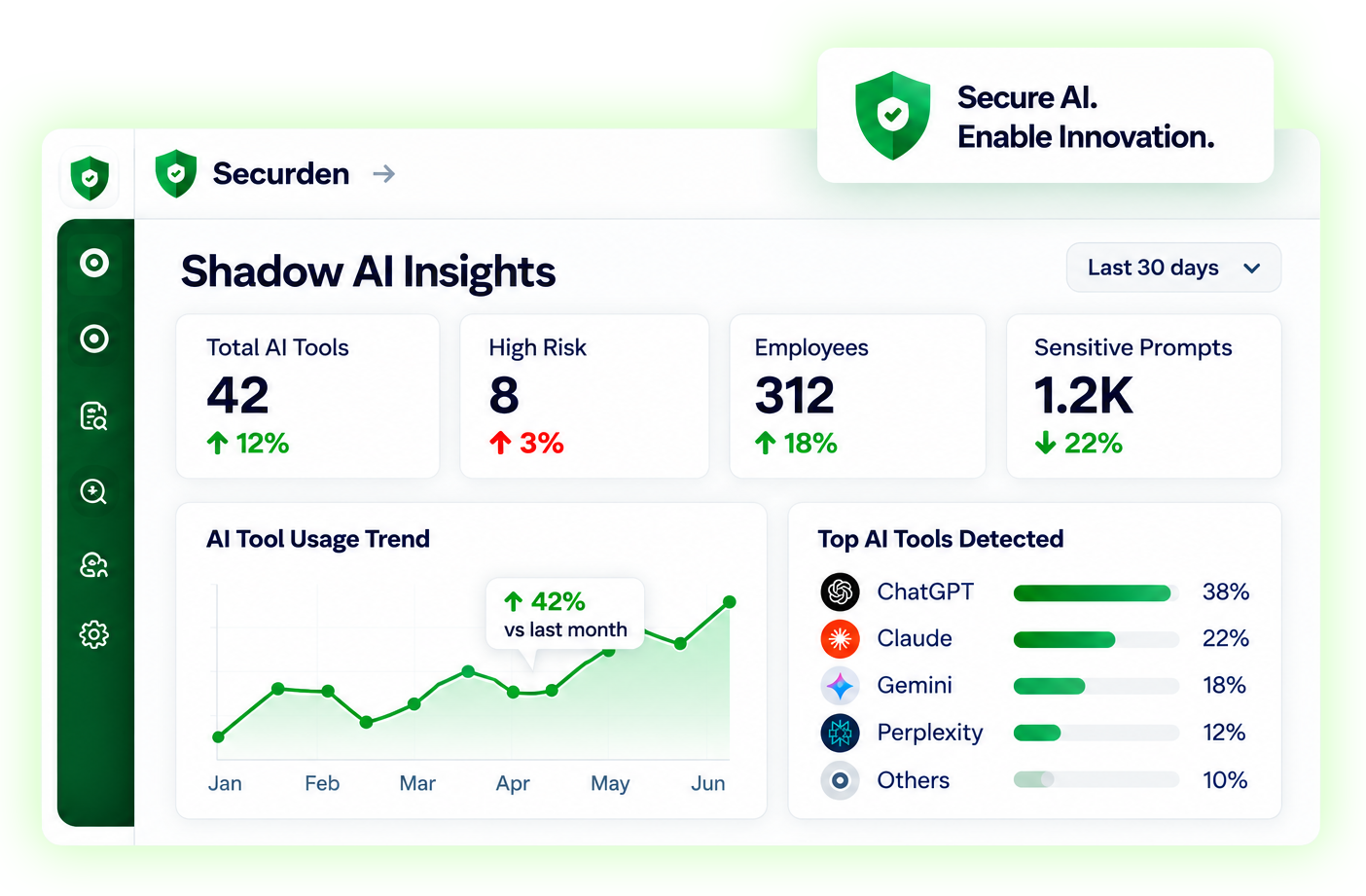









Employees are adopting AI faster than IT can govern it. They install desktop AI tools, browser extensions, local models, and AI agents directly on their endpoints.
The problem isn't AI. It's AI operating outside your security controls.
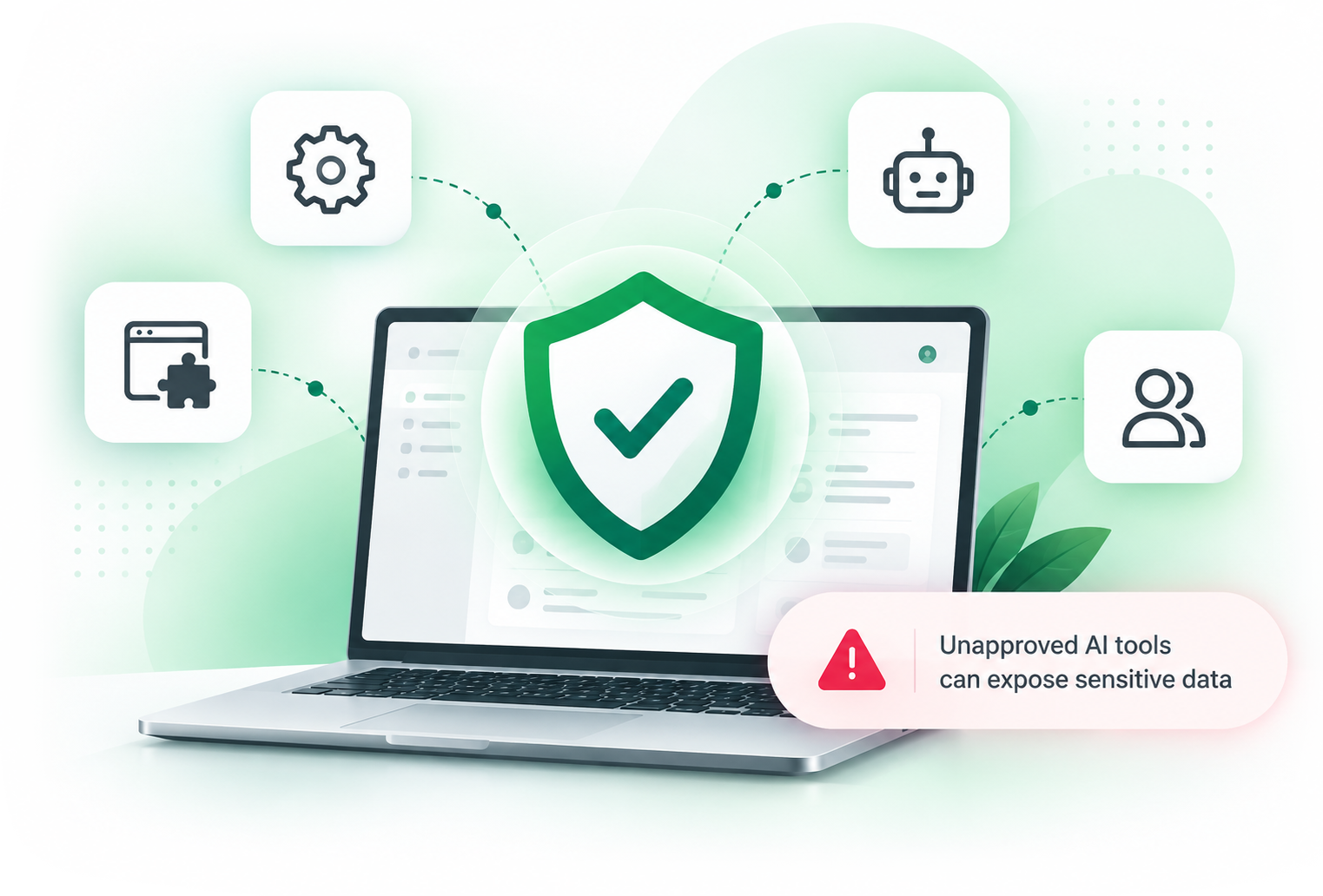
Users with local admin rights can install AI applications, local model runners, wrappers, and agents without IT approval. What starts as a productivity shortcut can introduce unvetted software into your environment.
AI assistants, summarizers, and writing tools can be installed as browser extensions with access to webpage content. Without application and extension controls, employees can introduce AI tools capable of interacting with sensitive business data.
While AI features can genuinely improve the usability and expand the capabilities of an app, it is no longer the same app you approved. An AI layer introduces threat vectors that require a thorough re-evaluation.
Employees install AI apps, spin up local LLMs, deploy AI agents to make their work more efficient - all without IT’s knowledge. Without visibility into AI tool adoption, organizations cannot identify which AI applications are accessing sensitive data, executing code, or introducing new software and supply-chain risks.
Your data may be entering AI tools you don't control.
Your employees may upload corporate data and proprietary source code into unapproved AI chatbots for efficient processing, code optimization, and fast-tracked output. Without visibility into AI usage, security teams can't determine what data is being shared or where it goes.
Shadow AI promises productivity gains and delivers data-loss risks.
AI-generated code can introduce vulnerabilities.
Unvetted AI coding tools can generate insecure code, recommend vulnerable dependencies, or suggest obscure and nonexistent packages. Developers may unknowingly introduce these vulnerabilities into production environments.
Vulnerabilities make the code susceptible to exploits and data breaches.
Inherited admin rights cause privilege creep.
When users have local admin rights, the AI agents and applications they install inherit those privileges. They can then spawn processes, install software, modify configurations, and access resources with elevated permissions.
Excessive privileges increase the blast radius of minor security incidents
You can't audit what you can't see.
Allowing users to run unaudited AI applications lapses compliance with HIPAA, NERC-CIP, PCI-DSS, GDPR, Essential Eight, and others. Autonomous AI agents add to the activity tracking challenge by executing actions at machine speed, often through non-human identities.
Limited visibility and accountability cause compliance failure, fines, and reputational damage.
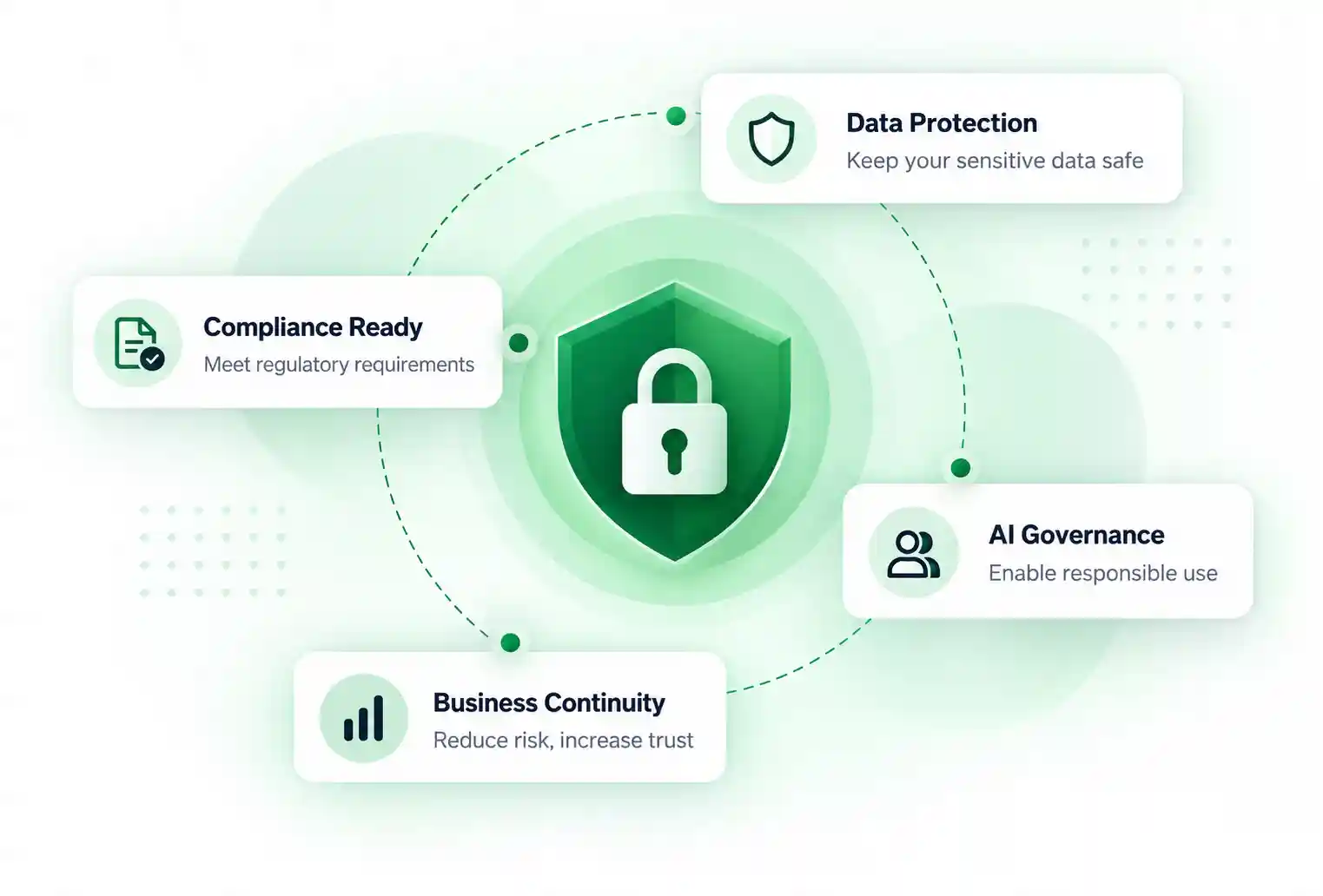
Securden Endpoint Privilege Manager turns Shadow AI from an invisible risk into a governed, auditable part of your IT environment, without slowing anyone down.
Book a Demo
Gain instant visibility into every AI tool being run by users on their Windows and macOS endpoints. Discover installed AI apps, portable executables, scripts, and unknown binaries, along with metadata like file hash, publisher, and file path.
AI agents and tools do not need local admin rights to function. Eliminate local admin rights across endpoints and servers. Elevate individual applications on a just-in-time basis through granular policies and approval workflows.
Monitor which applications and AI tools are run on endpoints and continuously feed data to SIEM tools. Prove compliance with regulatory compliance using drilled down reports for GDPR, HIPAA, PCI-DSS, NERC-CIP, and Essential Eight.
Control what AI agents and tools users can run on their endpoint with granular application control. Allowlist approved AI tools and applications. Everything else is automatically blocked.
Gain complete visibility into AI tools in use, and all agentic AI activities. Securden helps you contain shadow AI without preventing employees and development teams from using approved AI securely.
Book a DemoSecurden Endpoint Privilege Manager enables employees to use AI productively while giving IT the visibility and control needed to protect sensitive data, reduce security risks, and meet compliance requirements.
| Without EPM | With Securden EPM |
|---|---|
|
AI tools operate in the shadows IT has no visibility into what desktop AI applications, local models, scripts, and agents are running on corporate endpoints. |
Complete AI tool inventory Continuous application discovery identifies every AI application, portable executables, scripts, and agents running across Windows and macOS endpoints. |
|
No control over installation and execution Employees can install and execute any AI tool they want to without any IT oversight. |
Only trusted AI tools can run Policy-based allowlisting allows users to freely use approved AI tools while all other tools are automatically blocked. |
|
AI agents inherit excessive privileges An agent launched by a privileged user can inherit those privileges and pass them to processes it creates. |
AI Agents run with minimum permissions AI agents cannot gain admin rights by default, and applications are elevated based on need and in accordance with the privilege elevation policies. |
|
Limited visibility into AI tool use IT teams have little context about which AI applications are being executed and by whom. |
AI tool execution is audited Record which AI tools are launched by whom and when. Track every application execution and privilege elevation activity continuously. |
|
Compliance evidence is difficult to establish Teams must manually piece together evidence of application usage, privilege, and access controls during audits. |
Readily available evidence Use detailed activity and privilege reports to demonstrate compliance with regulatory requirements. |
Get complete visibility into AI usage on your endpoints, enforce least privilege on every tool and every agent, and turn Shadow AI into governed AI and realize productivity gains without the security risks.


Shadow AI most commonly enters the organization through the three ways mentioned below.
AI agents execute at much higher speeds than humans. Granting AI agents excessive privileges create a huge security blind spot that can be misused by the agent, external threat actors, and malicious insiders.
Granting admin rights to users is risky. Granting them to AI agents is exponentially riskier.
You can prevent users from introducing new and unapproved AI tools by enforcing strict application control and allowlisting. However, the success of this operation depends on whether employees have a comprehensive set of tools with (or) without AI to enhance their productivity.
If the employees don’t have access to the tools they need, they will find ways to circumvent the security measures in place, causing more security and compliance issues.
Yes. Granular allowlists and blocklists let you approve vetted AI tools by publisher, hash, path, or version and block everything else by default.
They raise an access request with a business justification. Admins approve or deny through a defined workflow, and approved access can be time-limited and fully audited.
No. Application privilege elevation happens in seconds, and discovery runs silently in the background.
Yes. Policies are cached locally and enforced even without connectivity, with offline activity logged and synced later. Approved AI tools and agents can run seamlessly regardless of the physical location and network connectivity of the device.
No. EPM complements them. While EDR detects threats after execution begins, Securden prevents unapproved software, including unsanctioned AI tools from executing at all.