Securden Password Vault for Enterprises gives users secure, one-click access to remote systems directly from the accounts they are authorized to use. Credentials are automatically supplied during connection launch, eliminating the need to view, copy, or manually enter passwords.
Websites and web applications can be launched through the Securden browser extension, with credentials automatically filled into the relevant sign-in fields. RDP, SSH, and SQL connections can be launched through a browser-based interface or supported native client applications using the lightweight Securden Remote Launcher. Connections are routed securely through the Securden server, preventing direct connectivity between the user’s device and the target system.
Launch Web Applications With Credentials Auto-Supplied
Web application accounts stored in Securden can be launched directly from the password vault using the Securden browser extension.
Once the extension is installed and configured, users can select an authorized account and click Launch. The associated website or web application opens in a browser window, and the extension automatically fills the stored credentials into the relevant sign-in fields.
Users can securely access websites and web applications without viewing, copying, or manually entering the underlying passwords. This provides convenient browser-based access while keeping credentials protected and centrally controlled.
Browser-Based RDP, SSH, and SQL Connections
Give users the flexibility to access RDP, SSH, and SQL systems through an HTML5-compatible browser without configuring a VPN or maintaining direct network connectivity to the target asset.
The lightweight Securden Remote Launcher establishes the connection from the user’s device, while credentials are supplied securely without being displayed or manually entered. Users can access authorized systems through a consistent browser-based interface from supported devices and locations.
Connections are proxied routed through the Securden server, keeping sensitive target systems isolated from direct user access.
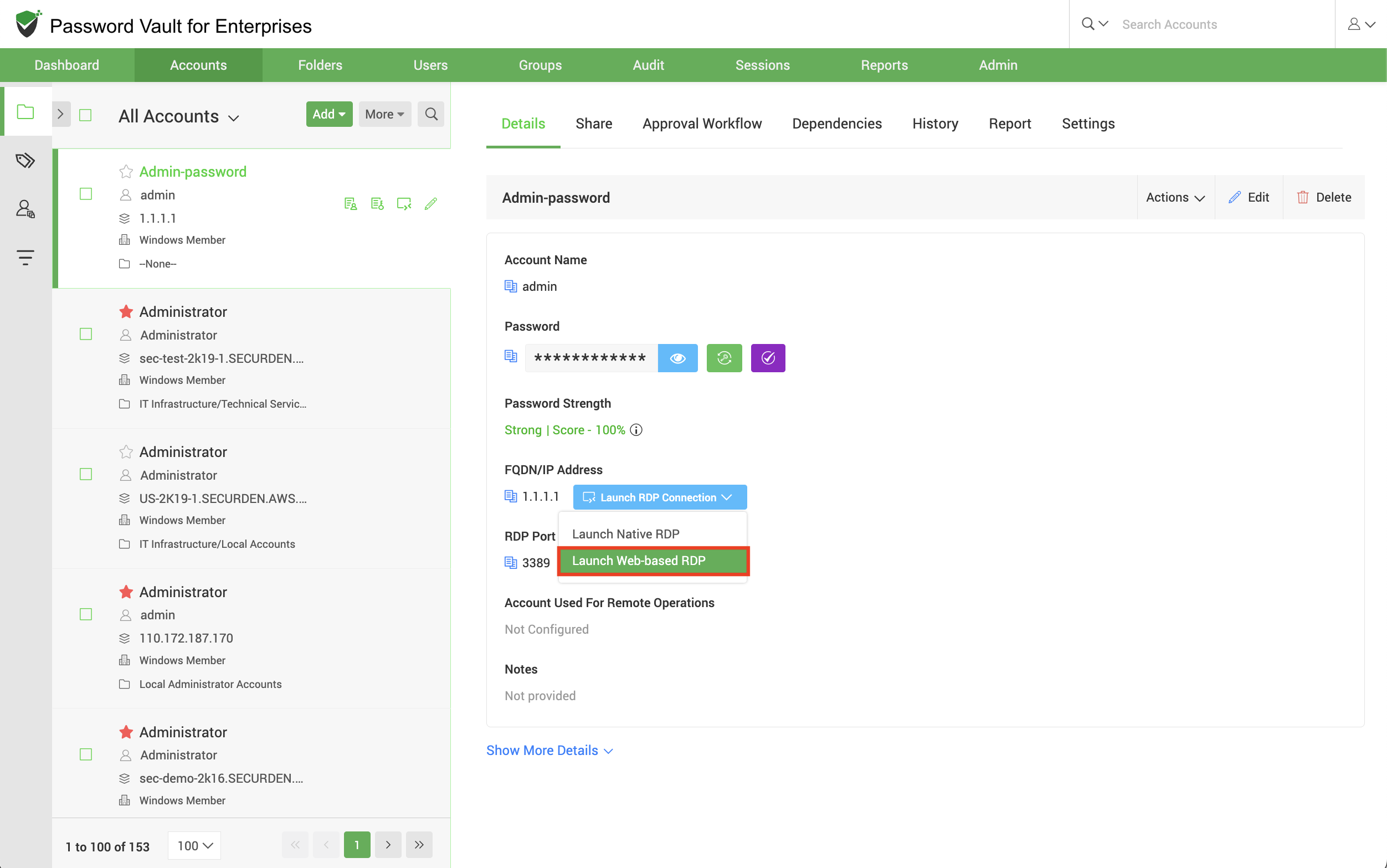
Native Client Sessions for RDP, SSH, and SQL
Users who prefer dedicated client applications can launch native sessions directly from Securden Password Vault for Enterprises using the same credential-controlled access workflow.
Supported native clients include:
- RDP: Microsoft Remote Desktop Connection (MSTSC)
- SSH: PuTTY and SecureCRT
- SQL: SQL Server Management Studio (SSMS)
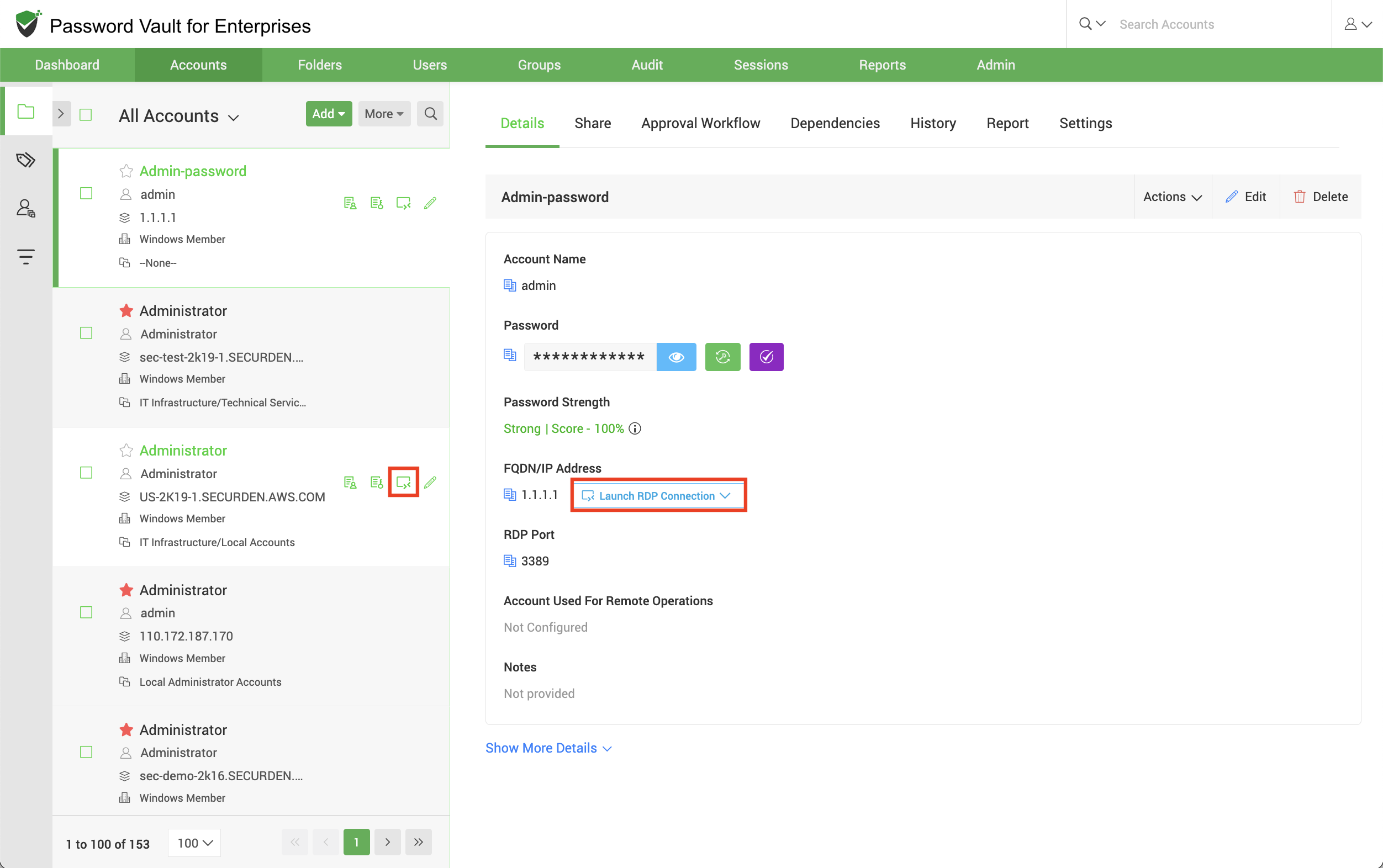
The relevant client application and the lightweight Securden Remote Launcher must be installed on the user’s device. Once configured, users can select an authorized account, choose the required client, and launch the connection.
The native client opens automatically, with the required credentials supplied by Securden. Users can access the target system without viewing, copying, or manually entering the password.
Securely Launch Custom Applications
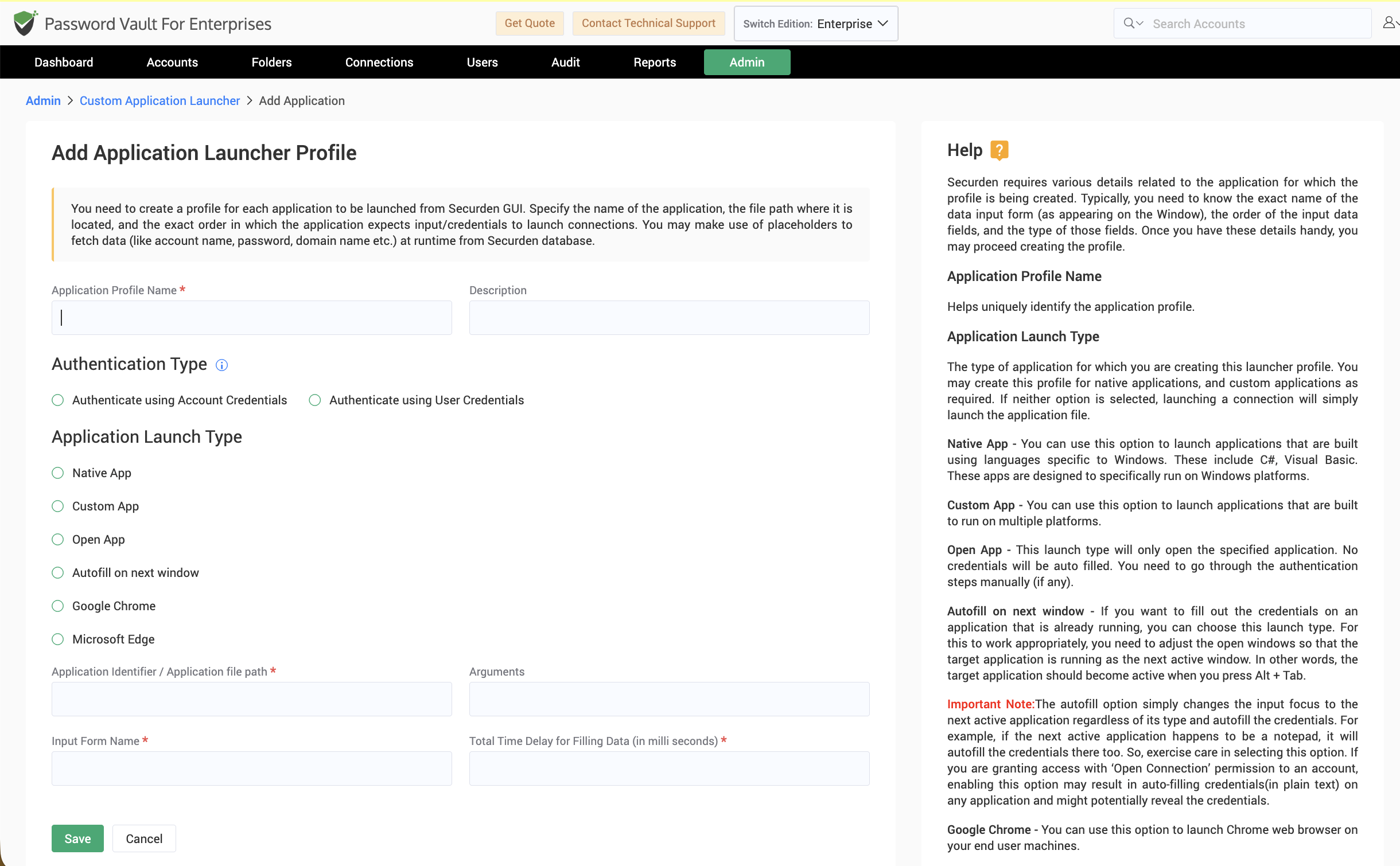
Securely launch custom, thick-client, legacy, and administrative applications that do not support conventional browser-based autofill.
Administrators can create and assign launcher profiles containing the application, account information, and required parameters. When an authorized user initiates access, Securden opens the application and automatically supplies the necessary credentials—without revealing the password.
This extends secure, one-click access beyond websites, web applications, RDP, SSH, and SQL systems to other business-critical applications.
Make Every Connection Launch Traceable
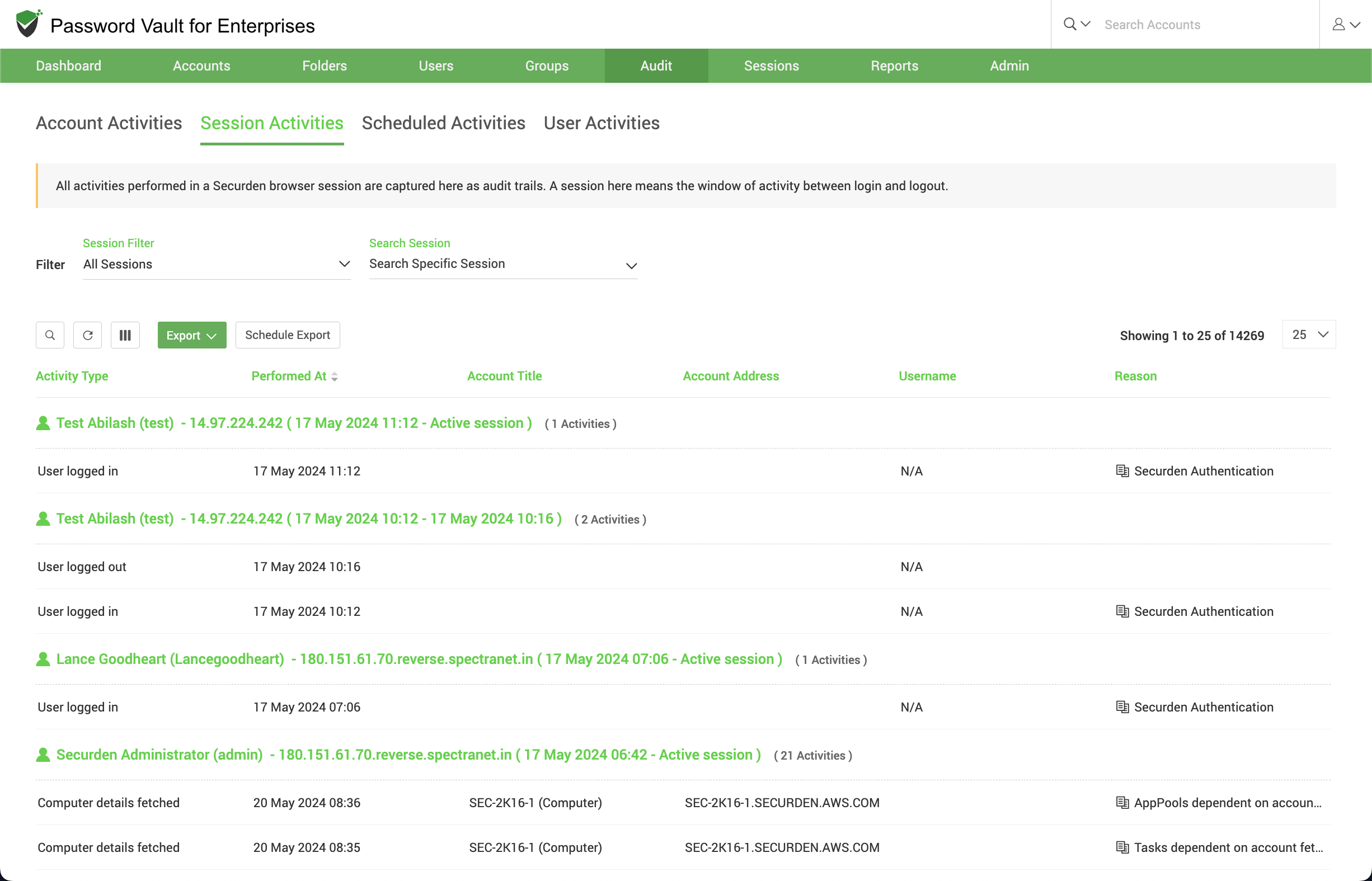
Every connection initiated through Securden Password Vault—including browser-based sessions, native client sessions, and web application launches—is captured as an audit event.
Audit records include details such as:
- The account accessed
- The user who initiated the connection
- The date and time of access
- The originating IP address
Security and IT teams gain a complete record of remote access activity, making it easier to investigate incidents, review privileged usage, and demonstrate compliance.
Benefits at a Glance
| Connect Without Revealing Credentials
Credentials are automatically supplied during connection launch, allowing users to access systems without viewing, copying, or manually entering passwords. |
| Launch Web Applications Directly From the Vault
Open web applications directly from authorized accounts in Securden, with credentials automatically supplied at launch. |
| Browser-Based Access Without a VPN
Launch RDP, SSH, and SQL connections through an HTML5-compatible browser without requiring users to establish a VPN connection or gain direct network access to target systems. |
| Use Native Clients Securely
Continue using familiar tools such as MSTSC, PuTTY, SecureCRT, and SSMS while Securden securely supplies the credentials required to establish the connection. |
| Prevent Direct Access to Target Assets
Connections are securely routed through the Securden server, eliminating direct connectivity between the user’s device and sensitive target infrastructure. |
| Maintain Complete Audit Visibility
Track every connection launch with the associated user, account, timestamp, and originating IP address. |
| Manage Remote Access From One Interface
Launch browser-based sessions, native client connections, and web applications from the same vault under centralized access controls and audit policies. |

